I have written a lot about the Northside community in downtown Chapel Hill and other historically-black neighborhoods in Chapel Hill. And I also have written about the influx of developers who want to turn family homes into student housing.
Northside is changing and many “old Northsiders” have embraced the resulting ethnic and socio-economic diversity — including students as well as new immigrants–and have formed alliances with other activists fighting tirelessly to preserve a sense of community. You can see that their hard fought efforts are paying off whenever you step into the Rogers Road or the Hargraves community center at about 3 pm any day of the week.
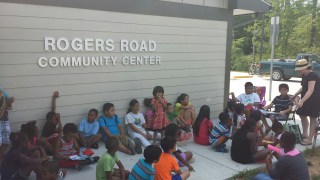
Every day after school, community activists and volunteers are hard at work and at play with all kinds of kids from the surrounding neighborhoods: African-American, Latino, Burmese (Karen), and white kids are eating delicious snacks prepared for them on-site. They are reading, doing homework, and shooting hoops with college kids and other  volunteers; and they are bonding with each other, the way kids do– just by being around each other day in and day out and sensing that they are being treated equally and with respect by the adults in the room.
Many people who lived through segregation will say that they were raised by an entire community– neighbors, teachers, preachers, relatives– and that they were expected to be respectful and play well with others. At the community centers, the same thing is happening today.
The same forces are at work– loving and caring– even if the kids no longer live in the same neighborhood, attend the same church, or go to the same schools, as Northsiders used to. Families aren’t as interdependent, don’t live so close together and don’t depend on each other the way “old” Northsiders did. Something got lost, but thanks to so many activists, there’s still a lot happening every day that is making kids feel a part of something bigger.
![Hargraves_4[1]](https://i0.wp.com/chapelhillstories.com/wp-content/uploads/2017/12/hargraves_41.jpg?w=335&h=251&ssl=1 "Hargraves_4[1]")
![Hargraves_3[1]](https://i0.wp.com/chapelhillstories.com/wp-content/uploads/2017/12/hargraves_31.jpg?w=333&h=251&ssl=1 "Hargraves_3[1]")
Murals at Hargraves Community Center, Northside, Chapel Hill
On a day right before the Thanksgiving holiday, I asked a spunky third-grader who lives on Craig Street in Northside what she was thankful for. She responded, “I am thankful that I can have a birthday party and invite kids from my neighborhood and that I can play with them whenever I want.” As most parents will tell you, such a thing is rare these days. Parents shuttle kids all over town when they get together for “play dates” and parties.
But Olivia seems to have what Northsiders used to have: enough similar-aged neighborhood kids for a birthday extravaganza. And yet, a party like Olivia’s would never have taken place in Jim Crow Chapel Hill: her party was hosted by her parents, Jason, who is white, and Donna, who is black.
Guests likely reflected the ethnic diversity of today’s Northside.

Olivia (in much younger days) with her parents. (Source: donnabell4ch.com)
Community is alive in Northside because its long-time residents largely have accepted change, welcoming new families and students even while resisting and challenging developers and landlords who are indifferent to Northside’s historical importance and community spirit.
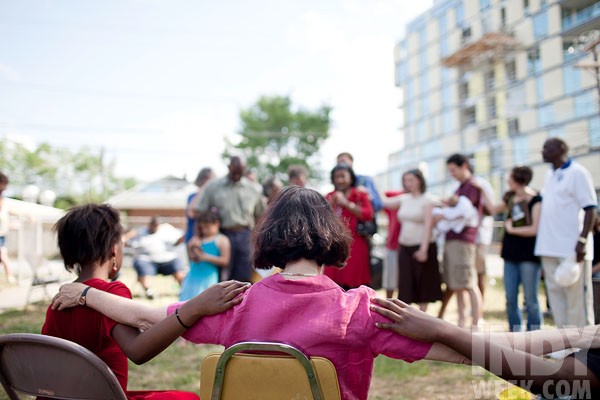
Protest of Greenbridge development (Source: IndyWeek.com)
And some of the new residents are getting the message and joining seasoned neighborhood activists. They seem to have slowed the tide of disruptive change and succeeded in drawing attention to would be irretrievably lost if market forces aren’t reigned in.
Many current residents are trying to set the terms for the new Northside. Some of those residents have been fighting for years. These days activists’ voices sometimes rise about the din of bulldozers, excavators, and jackhammers, letting the town know that they will not be moved. If, as many here believe, the arc of the university bends toward justice, then history is on their side.
To join the cause, click here, then contact the Jackson Center.
 Chapel Hill Stories