These photos are from Jim Wallace, Courage in the Moment, and the quotes that follow each photo are from interviews recently recorded with local movement participants, residents of the Northside and Pine Knolls neighborhoods in Chapel Hill. Photos and interviews can found on the Marian Cheek Jackson Center website in the Oral History Archive.
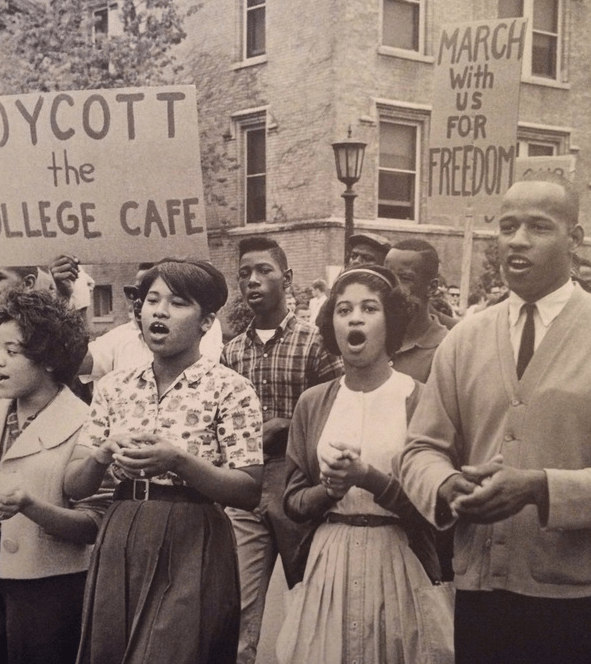
Carol Purefoy Brooks (second from the right): “I think basically in Chapel Hill we had a wonderful march. … Chapel Hill wasn’t as violent. … It just seemed like you were enjoying yourself and having a wonderful time, getting to know new people. … We were cheerleaders at Lincoln High School and they asked if we wanted to lead a march. And we said, ‘Yes, we did.’ We all grew up here and we all knew each other even though he [Harold Foster, one of the movement leaders] was older. We all got along well.”
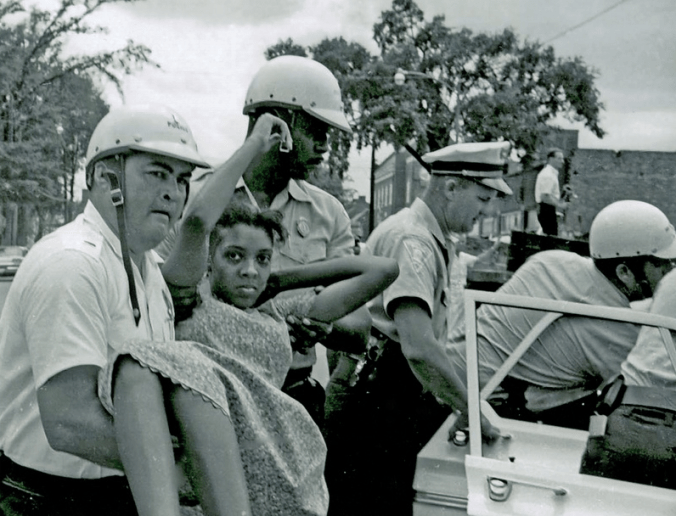
Euyvonne Cotton (looking straight at the camera): “I had on a dress. When they first picked me up they had me by here and here. I didn’t know who picked me up, but I know it was a young white cop in front of me. … And it was funny, because he was trying to shake me to shake my dress down so they could see up underneath that dress. I vaguely remember getting into that car. I remember getting locked up, all of us in that cell, you know. But I was not mistreated by them. … I was fifteen. And they didn’t know I was fifteen at the time. And when they realized how old I was, they said, ‘You have to go.’ …I got involved because my uncle, James Brittain, was involved. This was his life.”

James Foushee (top left, man on far right, participating in Easter Week hunger strike, March, 1964): “Our whole objective was to wear the cops out.”
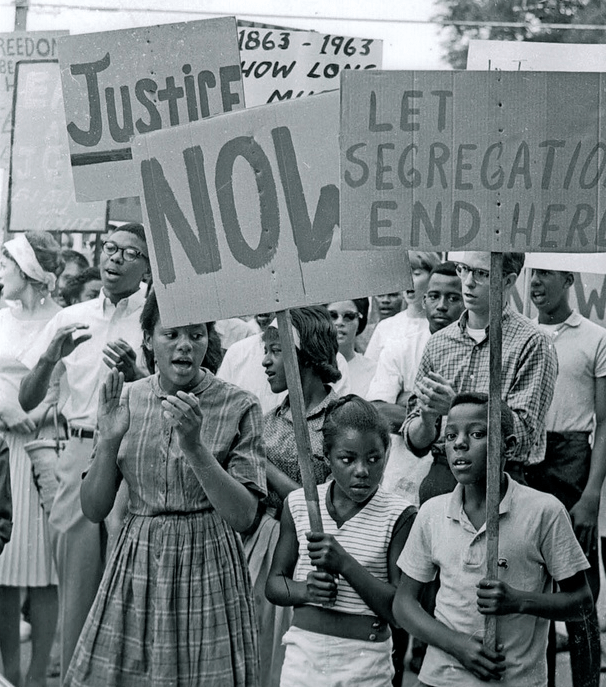
Linda Brown: “I can remember my mother sending us down and telling us that she wanted us to participate—the children. They wanted the children to participate because they could not do it because of their job. So that’s why we went out there instead of our parents marching. So that’s how my family got involved.”
Keith Edwards: “In ’61, I was eleven and Linda was ten. We were just marching. Whenever somebody told us to march, we’d march.”
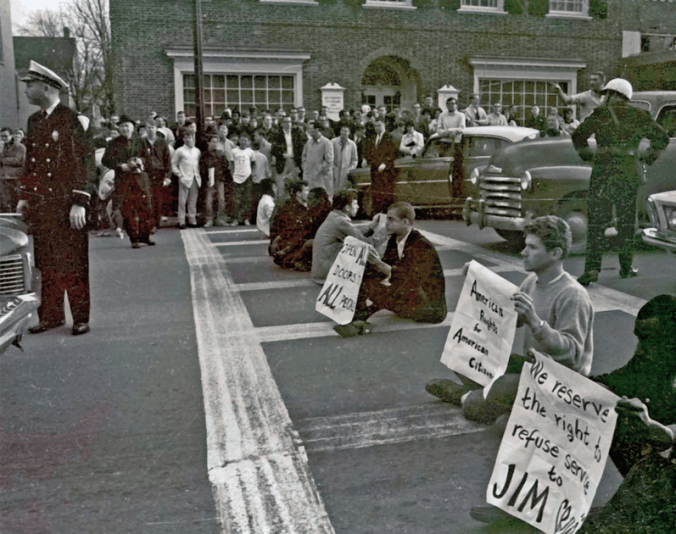
Keith Edwards (speaking to a gathering of Chapel Hill civil rights movement veterans): “Well there was one time, you all were sitting in the streets… and what happened, some people were coming up, motorists. There were some white motorists. And they would put their car in park. But they would rev the motor up. You know, they would just smash on the gas. And that would really scare me, that the car was going to jump out of gear and, you know, run over you all. Because it would have killed you because the cars were right on up and you could read the bumper. And that was scary for me to even watch. But you all stood your ground. You did not move.”
William Carter: “We were ready to jump up at in a heartbeat, just in case.” [laughter]

Clementine Self (woman holding flag): “Well, I was very involved. I did all of the marches. I did the sit-ins but I didn’t allow myself to get arrested, because my dad worked at that time at the Carolina Inn and he thought that if I got arrested he might lose his job.”
Hudson Vaughan: “That’s probably true.”
CS: “Probably true. So I’d do that and do the sit-in, but when the police got to me I’d stand up and move back, and other people would get arrested, but that’s the only reason why I didn’t. But I did all the marches, the sit-ins, the whole nine yards. But they felt, they didn’t have any problem with me doing it.”
(Find these photos and more in the oral history archive at: jacksoncenter.info)
 Chapel Hill Stories