The platoon was segregated. And on that island of Bougainville, after things got quieted down over there, we ran into some white companies, and we socialized together. And after we took the island, they brought us beer and stuff up there then, and we’d get together and just drink beer together. But as far as being together fighting, the blacks were in their part and the whites in their part.
Joseph Fearrington, Resident of Northside
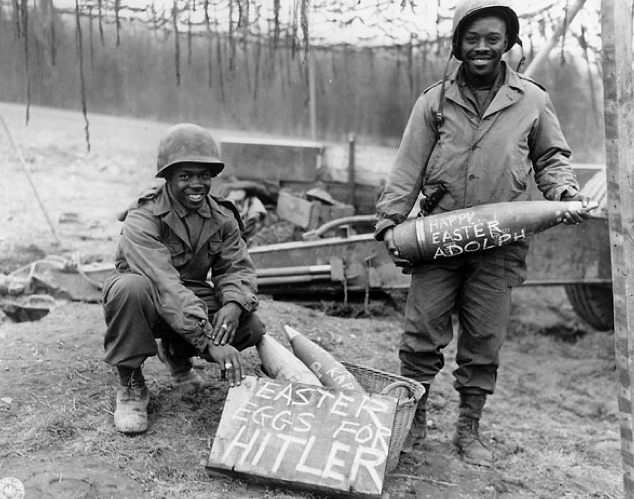
Northside, Pine Knolls, Tin Top and Rogers Road are home to many veterans– including a few, like Joseph Fearrington, who served in a segregated army. The history of African Americans in the armed forces is not much different than the history of African Americans in a deeply racist America. African-Americans served a country that relegated them to second-class citizenship; the armed forces willingly accepted them, and yet their service didn’t make a difference when they returned to the segregated South.
At no time was the injustice more clear than after World War II. Having helped defeat Hitler and liberate the Nazi concentration camps, African Americans were at the center of a heroic chapter of history, part of what has been called the “greatest generation,” and yet are virtually unrecognized as such.
Deeply embroiled in an ideological war against Communism, the US depicted itself as the leader of the free world, even as Jim Crow kept African Americans from exercising basic rights enjoyed by white US citizens, an irony that did not go unnoticed by Communist governments eager to point out US hypocrisy. And it didn’t go unnoticed by African American soldiers from the southern US, many of whom experienced their first “breaths of freedom” while serving in the military.
As many returning soldiers from the South saw it, they faced more danger at home than they had in Europe: “It was much more difficult functioning in the US than it was in Europe. You know you could run and hide from rockets coming out of Aachen, Germany. But you couldn’t run and hide from the kind of verbal abuse you got in Alabama, Georgia, Mississippi.” An editorial in the Chicago Defender in 1950 asked, “Why is it that a Negro soldier can face death alongside a white soldier in the heat of battle but still can’t sit alongside him and fraternize when the war is over?”

For some, especially those who had a white partner, staying in Europe was a better option than returning to the South. According to one US Air Force veteran: “‘We were treated better by the civilian population than we were treated in America. See, in our country we could not buy a hotdog when we were in uniform, had to ride in the back of the bus when we were in uniform. … That is why a lot of blacks took their discharge in Europe. They said, look, ain’t nothing in America for me.’”
Once it moved into the global spotlight, the glaring injustices in the military led to official desegregation in 1947. Nevertheless, as soldiers’ testimonies suggest, actual integration and equality came very slowly.
Historian Maria Hoehn has written books about African-American GIs in Germany and discovered a connection between experience in the military and participation in the Civil Rights movement. In fact, many Civil Rights leaders had been stationed in Europe and concluded that the sorts of freedoms every soldier enjoyed had to be possible in the land of the free as well. William Gardner Smith, author of Return to Black America, wrote, “So you know what it’s like for a Negro to be among the ‘conquerors’ instead of the defeated? We learned about it for the first time when we ‘occupied’ Germany and none of us ever got over it. We’ll never go back to the old way again. … We were equal, in fact more equal, than the Germans.”
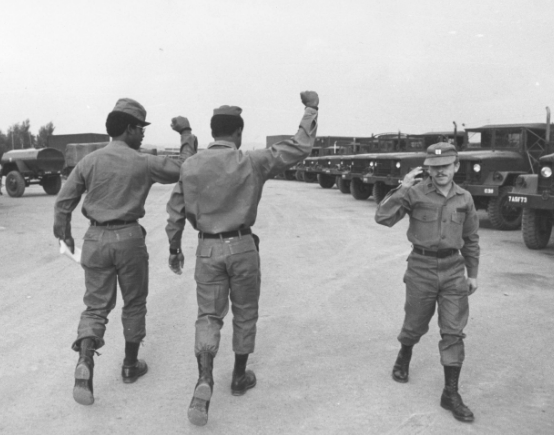
Not only did this realization lend a spark to the civil rights movement back home, but black GIs also became increasingly politicized within the armed forces. A 1970 Defense Department report on the state of race relations in the military in Europe noted that the movements wrenching apart the country at home were also leading to rifts on military bases. Race relations, it said, were the Army’s biggest concern abroad. Integration meant the end of official segregation but did not end racism and abuse among servicemen and women.
So, this Veteran’s Day, when you thank an African-American vet for his or her service, you can thank them for standing tall in the face of racism inside and outside the military. And often you can also thank them for helping bring the fight against racism home and helping to bend the moral arc of the universe toward peace and justice.
For information on how to watch a Smithsonian documentary, “Breath of Freedom,” produced by Maria Hoehn, see: https://www.smithsonianchannel.com/shows/breath-of-freedom/0/3402153.
To listen to Joseph Fearrington’s oral history, go to: https://archives.jacksoncenter.info/items/show/382.
The platoon was segregated. And on that island of Bougainville, after things got quieted down over there, we ran into some white companies, and we socialized together. And after we took the island, they brought us beer and stuff up there then, and we’d get together and just drink beer together. But as far as being together fighting, the blacks were in their part and the whites in their part. Joseph Fearrington
Northside, Pine Knolls, Tin Top and Rogers Road are home to many veterans– including a few, like Joseph Fearrington, who served in a segregated army. The history of African Americans in the armed forces is not much different than the history of African Americans in a deeply racist America. African-Americans served a country that relegated them to second-class citizenship; the armed forces willingly accepted them, and yet their service didn’t make a difference when they returned to the segregated South.
At no time was the injustice more clear than after World War II. Having helped defeat Hitler and liberate the Nazi concentration camps, African Americans were at the center of a heroic chapter of history, part of what has been called the “greatest generation,” and yet are virtually unrecognized as such.
Deeply embroiled in an ideological war against Communism, the US depicted itself as the leader of the free world, even as Jim Crow kept African Americans from exercising basic rights enjoyed by white US citizens, an irony that did not go unnoticed by Communist governments eager to point out US hypocrisy. And it didn’t go unnoticed by African American soldiers from the southern US, many of whom experienced their first “breaths of freedom” while serving in the military.
As many returning soldiers from the South saw it, they faced more danger at home than they had in Europe: “It was much more difficult functioning in the US than it was in Europe. You know you could run and hide from rockets coming out of Aachen, Germany. But you couldn’t run and hide from the kind of verbal abuse you got in Alabama, Georgia, Mississippi.” An editorial in the Chicago Defender in 1950 asked, “Why is it that a Negro soldier can face death alongside a white soldier in the heat of battle but still can’t sit alongside him and fraternize when the war is over?”
For some, especially those who had a white partner, staying in Europe was a better option than returning to the South. According to one US Air Force veteran: “‘We were treated better by the civilian population than we were treated in America. See, in our country we could not buy a hotdog when we were in uniform, had to ride in the back of the bus when we were in uniform. … That is why a lot of blacks took their discharge in Europe. They said, look, ain’t nothing in America for me.’”
Once it moved into the global spotlight, the glaring injustices in the military led to official desegregation in 1947. Nevertheless, as soldiers’ testimonies suggest, actual integration and equality came very slowly.
Historian Maria Hoehn has written books about African-American GIs in Germany and discovered a connection between experience in the military and participation in the Civil Rights movement. In fact, many Civil Rights leaders had been stationed in Europe and concluded that the sorts of freedoms every soldier enjoyed had to be possible in the land of the free as well. William Gardner Smith, author of Return to Black America, wrote, “So you know what it’s like for a Negro to be among the ‘conquerors’ instead of the defeated? We learned about it for the first time when we ‘occupied’ Germany and none of us ever got over it. We’ll never go back to the old way again. … We were equal, in fact more equal, than the Germans.”
Not only did this realization lend a spark to the civil rights movement back home, but black GIs also became increasingly politicized within the armed forces. A 1970 Defense Department report on the state of race relations in the military in Europe noted that the movements wrenching apart the country at home were also leading to rifts on military bases. Race relations, it said, were the Army’s biggest concern abroad. Integration meant the end of official segregation but did not end racism and abuse among servicemen and women.
So, this Veteran’s Day, when you thank an African-American vet for his or her service, you can thank them for standing tall in the face of racism inside and outside the military. And often you can also thank them for helping bring the fight against racism home and helping to bend the moral arc of the universe toward peace and justice.
For information on how to watch a Smithsonian documentary, “Breath of Freedom,” produced by Maria Hoehn, see: https://www.smithsonianchannel.com/shows/breath-of-freedom/0/3402153.
To listen to Joseph Fearrington’s oral history, go to: https://archives.jacksoncenter.info/items/show/382.
 Chapel Hill Stories