Teaching in Black and White

 Chapel Hill High then and now…

But I just told him, your generation’s dying, dad. We’ll take over from you and we’ll do it our way now.    Bettie F.


On one of the many unseasonably warm days this December, I had the chance to talk with a friend in the Carol Woods Retirement Community in Chapel Hill. Bettie is white, a soft-spoken eighty-something with a warm, welcoming demeanor. As we sat sipping tea in her living room, surrounded by walls and shelves full of mementos from the rich intellectual life of a traveler and educator, she spoke freely and modestly about her life journey. She is the sort of person who appears worldly and cosmopolitan, so that it is a bit surprising when she starts by revealing her deep roots in the rural South. Like many Southerners I’ve met, Bettie speaks honestly and directly about race:

My dad was from South Carolina, and he was very learned. But he was chemically a racist. But he was a gentleman. And if the maid was black and she picked up your sugar cube and put it in your cup like that, he didn’t blink. He just was perfectly happy with that because he was used to being around black people. And because you are civilized you speak well and you do not feel– . Anyway, and mom was a Christian. “Everyone is God’s child,” and all that jazz. And she just loved little pickaninnies. [laughs] Anyway, but she is genuine, and she tried to integrate her church.

Something about the way she tells the story, consciously including unflattering details without sentimentality makes it easy to ask for more. And Bettie graciously continued:

Dad had a rage, I think, about what happened to South Carolina. He was born in 1883; he’s much older than my mom. And his feeling was– he was born twenty years after his grandfather was killed at Chicamaugua, and that was the one who owned the farm and the plantation and so forth. And his other grandfather was killed, his father’s grandfather, and they lost the slaves, they lost the land, and the house was destroyed by Sherman’s raiders. Not Sherman, but the kind of riff-raff that went along with losing and all that. And he always talked about Reconstruction in South Carolina.  But I came in absolutely with my mother’s ideas that everybody was deserving of an education; everybody should have good health; everybody should have respect and all the rest of it.

Bettie studied history, then traveled around the world to teach in private schools. She met her husband while teaching in Beirut, and they returned to the US when he was offered a university position. They had two children, moved around and ended up in Chapel Hill in 1964, just after the local civil rights movement had succeeded in pressuring local businesses to desegregate. School desegregation was underway but did not officially happen until 1967.

When I asked her what she thought of the reluctance of UNC and the Chapel Hill school board to desegregate as soon as it was ordered by the Supreme Court in 1954, she expressed disappointment with the leaders now usually credited with their progressive liberalism:

… it’s hard to accept that people like Frank Porter Graham [President of UNC from 1930-1949 ] also didn’t want to push it. They wanted it, but, I don’t know. My mother used to kick me under the table when I was mouthing off about things, because I couldn’t see any reason why you shouldn’t get together. [laughs] Couldn’t quite understand the deepness of the divide.

Bettie taught first at a private Quaker school, the first interracial school in the Chapel Hill area, before taking a job at Chapel Hill High School in the early 1970s. In the first years after desegregation, there were some tensions, culminating in a stand-off between some student protestors who opposed the way in which the white leadership often denigrated or overlooked black students, faculty, and traditions from the old Lincoln High school. What did Bettie notice when she arrived? How did she see the situation?

AW:            Did you feel like the administration of the history department was trying to get people to —Black and White—to get along with each other? You know, was there any dialogue about the race—just addressing the elephant in the room sometimes about race issues?

BF:            Oh no. Now granted I was hired right at the last minute after–. But no, I’m just friendly, so I got along.

AW:             But there was trust among the teachers then? There wasn’t any—

BF:            I don’t know what to say about that. I didn’t think the problem was the teachers, although I’m sure there were thoughts on the black teachers’ side on how privileged the white teachers were. I just didn’t hear it.

Bettie explains many of the issues in the school in black and white terms. A few former CHHS students told me that discussions of race had taken place in some classrooms. One teacher whose name came up a few times was the chairperson of the history department who taught the first classes in African American history. Mrs. Joyce Clayton would address racism in class and encourage students to challenge people to think about how to get along with each other.


Bettie is almost apologetic when she says she was primarily concerned that students learn the subject material and that students “should know things.” Her classroom was for learning about history and sociology, but that didn’t mean that learning didn’t get personal. In fact, Bettie took some bold steps to address race in her sociology classes:

I had a soc[iology] class and I was bringing a husband, who was black, and his wife, who was white, to talk about an interracial marriage. We were studying marriage at the time. And Pat was a very handsome, intellectual, competent leader in the community and one of the students got on her chair and yelled at him and yelled at him. I said, “You’ve got to leave the room.” So I finally got her out of the room and down the hall, yelling. I didn’t know what was wrong. And it turned out, she was a leader in the making of the Black community and here was a Black guy who wastes himself on a White woman. [laughs] I just had no idea. But he understood it very well.

Despite the tension apparent in the situation, in her humble and straightforward rendering I imagine students felt empowered to speak their minds on the issues of the day when they were in her classroom. Few teachers today would be as bold and passionate as to arrange for very personal discussions about race the way that she did. In fact, by encouraging students to discuss their own views and experiences in the classroom, Bettie clearly found ways to make sociology meaningful and relevant. I’m certain most students did not forget this lesson, though I wonder how they processed the discussion and what the different take-aways were.

Bettie’s own children had African-American friends and her daughter had a number of Black boyfriends.

…the one thing I thought that was good that was worked out was the Chapel Hill Preschool that was started at the Community Church in the sixties … and they matched the kids —one black to one white. And those kids knew each other all the way through school. And it didn’t work perfectly but they were used to each other. 

She is quick to add this is not to suggest she or her children somehow are free of racial bias. When she recounts those experiences, she still thinks she could have done more, learned more, to build a better understanding of race and make more connections to members of the Black community.

She enthusiastically reported on a forum she’d been to at her retirement community. Two women, one black and one white, talked about the book they had written together about attending Hillside High School in Durham at the time it was being desegregated. (For a link to the book by Cindy Geary and LaHoma Romicki, Going to School in Black and White, click here.) Unlike Chapel Hill High, white students were bussed to all-black schools, as well as the other way around. At Hillside in the 1970s, white students and faculty were in the minority.

The people in that book, both people white and black, had lots to learn about the other. I don’t know. I did not do that. I was just trying to teach history. I thought that was over with. I didn’t realize – maybe– since it was not by any means over with.

Perhaps the fact that desegregation was a one-way street, where Black students and teachers were always made to feel they had to catch up, that they were “lesser,” explains why integration has failed in Chapel Hill. Students are still separate, opportunities are anything but equal. The past defines the present.

Bettie challenges every one, no matter how committed to equality we say we are, no matter how smart we think we are, no matter how educated,  no matter how far we think attitudes toward race have evolved, to begin by changing our attitude:

I’ve been awakened to stop being so smug. These issues are deep within us and going on still.


The Poster in the Donut Shop

screen-shot-2018-01-16-at-1-15-10-pm.png

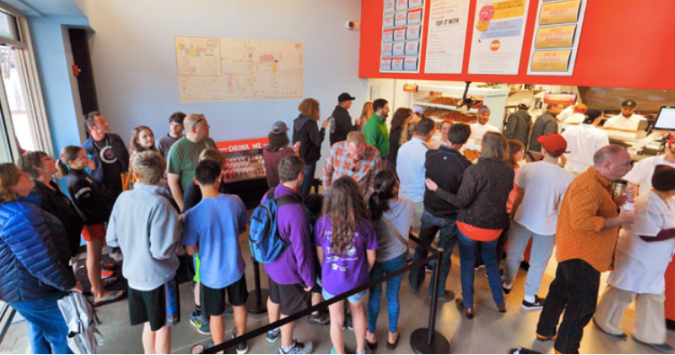
The donut shop in Carrboro on a busy morning with local map on the side wall.

We were in a hurry and the line in the upscale donut shop was long. This gave me a chance to take in the décor, in particular an enlargement of an old map of Chapel Hill and Carrboro.

donut shop .jpg

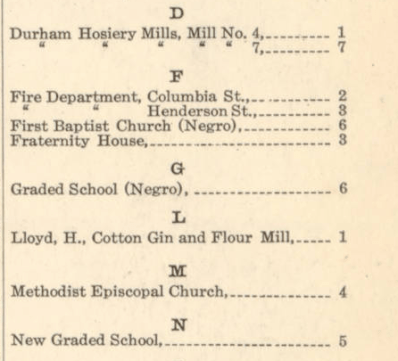
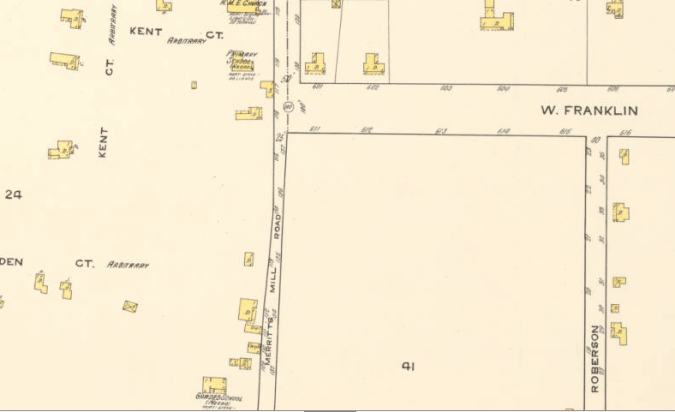
This popular shop opened just over one year ago on the main commercial drag of Screen Shot 2018-01-16 at 2.51.29 PMCarrboro, right next to the railroad tracks where Franklin turns to Main. The map shows this neighborhood, dated “1915.” Featuring prominently on the map are the various mills owned by Julian Carr, after which the town had been named just a few years prior to the year the map was drawn. Scattered among the mill buildings were a few houses, stores, churches, and a few schools, including the “Negro Primary School” and the “Negro Graded School.”
Screen Shot 2018-01-16 at 2.56.13 PM

Detail of 1915 map of Carrboro and Chapel Hill showing the border area between the towns. Merritt Mill Road was an African-American enclave, as was Kent Ct. and Eden Ct. (also known as Tin Top for the metal roofing material). The Negro Primary school is located at the top of the page and the Negro Graded School, later known as Lincoln High, is located at the very bottom of the map.


These labels are a clear indicator of the town’s Jim Crow past.

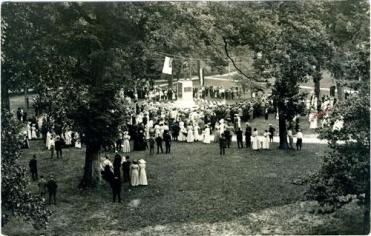
And yet, on the donut shop wall, the map is just a historic relic, a retro prop, a colorful reference to the place’s roots. But on closer look, the labels remind of an era in which the Klan was alive and well, Carrboro was a no-go zone for blacks, and white supremacy was the law. This was the time when the Silent Sam memorial, now the source of bitter controversy, was erected, and Julian Carr, the keynote speaker at its dedication in 1913 declared:

One hundred yards from where we stand, less than ninety days perhaps after my returnsilent sam dedication.jpg from Appomattox, I horse-whipped a negro wench until her skirts hung in shreds, because upon the streets of this quiet village she had publicly insulted and maligned a Southern lady, and then rushed for protection to these University buildings where was stationed a garrison of 100 Federal soldiers. I performed the pleasing duty in the immediate presence of the entire garrison, and for thirty nights afterwards slept with a double-barrel shot gun under my head.
At this time memorials and monuments honoring soldiers of the Confederacy were popping up all over the South, Klan activity was peaking, and Woodrow Wilson, an avowed racist and, in Carr’s words, “a distinguished son of the South,” was in the White House, all serving as very visible reminders that the racial order would be preserved even in the post-slavery South.

According to Jane Dailey, associate professor of history at the University of Chicago, “Most of the people who were involved in erecting the monuments were not necessarily erecting a monument to the past, but were rather, erecting them toward a white supremacist future.” (NPR, Aug 20, 2017)

Undoubtedly, Silent Sam and Julian Carr made the neighborhoods around the donut shop, which sits between the part of Chapel Hill known as Tin Top, where poor Blacks lived, and white working class Carrboro, scary places for Blacks. The tension created by dedication ceremonies celebrating the heroic deeds of Confederate soldiers must have been terrifying for many of the residents.

So, what makes it possible for such a map to function as colorful décor, an unproblematic, uncontroversial representation of a bygone era, a “commemorative landscape”? Few people, most likely including the shop owners, probably noticed the “Negro primary school” marker. But shouldn’t they have? Isn’t it obvious that any map of any Southern town would contain hints and markers of segregation? Don’t railroad tracks often signify a social divide? And aren’t right side and wrong side usually indicative of the color line? Do locals think that racial divides and violence associated with the Jim Crow South did not apply to a university town like Chapel Hill? And if so, isn’t this the problem with local lore– that white residents believe Chapel Hill wasn’t like the rest of the South, even as it was the “Southern” part of heaven?

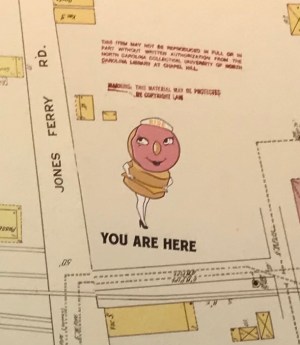
you are hereI think that anyone who hangs a map like this on a wall must think about what the map tells us about the time it was created. This map is full of meaning, a visual reminder of an unjust social and political order. Such a sign of the past should raise questions and yet, as decor, it does the opposite. It normalizes and romanticizes by encouraging a comforting nostalgia. And while donuts should always be considered comfort food, the chapter of the town’s history on the wall should always make people stop and think about what that history meant for those who lived through it, as uncomfortable as that will be for some. The past is also our present.

After all, as the map says, it’s 1915, and “You are here.”


Foundations

Slavery stole the identity of most African-Americans in this country. … It’s a wonderful experience to know who our distant ancestors are and to be able to tie it to a physical location.                                                                                         

Deardre Green-Campbell


Until a few weeks ago, if you happened to be driving down Purefoy Road just off of Rogers Road in north Chapel Hill and you looked very closely, you might have caught a glimpse through the tangled vines of an old dilapidated house. Though you would have seen no plaques or signs, some of the long-time locals would have been able to tell you the story of the place, the Hogan-Rogers House, built in 1843 by Thomas Hogan, a farmer and a slaveholder. Though local preservationists have called Hogan a “middle class” farmer, the fact that he owned more than forty slaves at the time he built the house made him one of the largest landowners in the area. Excavations of the house suggest that many of them must have lived in the basement with its dirt floors.

The house was purchased from the Hogans by Rogers at the turn of the century. Rogers, an African-American farmer, lived there until the Depression forced him to give it up about a century after it was built in the 1930s.

If you were to stop and do a bit of trespassing, here is what you’d see:

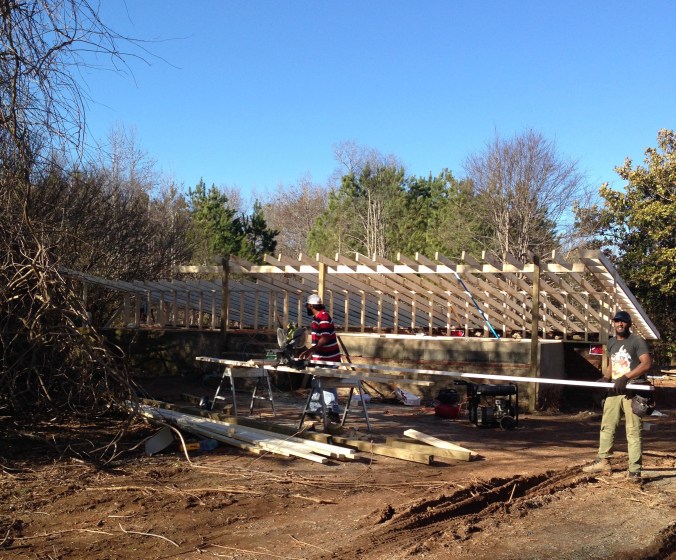
When the house was demolished, the floorboards and basement were left intact. It’s possible to stand on the remains of the main floor view, peer down the old staircase, and look into what was once the basement, with very low ceilings and dirt floors.


Around back, you’d have a view of the brick exterior that shows a small basement window; look through the window, and you’d see what once was a working hearth where slaves would have cooked.

More important than the story of the house is the story of the people who lived in it and the people who can trace their histories to the people who lived in it more than 150 years ago. And thanks to Deardre Green-Campbell, we now know a lot more than we did a few years ago.

deardre

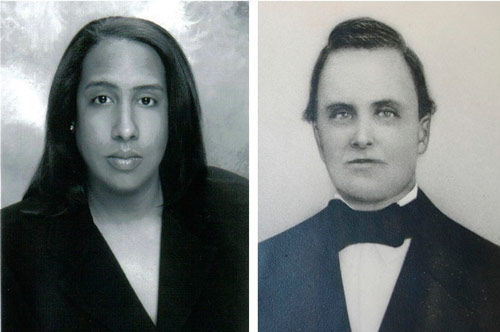
Deardre Green-Campbell (left), likely a direct descendant of Harriet Hogan, a slave,  and slave-owner, William Hogan (right; pictured here in the mid-to-late 1800s), a son of Thomas Lloyd Hogan, the builder and original owner of the house. (Source: ibiblio)

Deardre wanted to confirm what she somehow suspected: that she is a Hogan, too, a descendant of a Hogan family member and a slave named Harriet. She was able to get a DNA sample from a Hogan descendant living in Brooklyn, and we now know that her hunch was correct. For Deardre that was a really important discovery because it gave her a place she now calls “home.”

But what does her discovery mean for the rest of us? That question should be answered on a  personal level– and that’s why it’s so important to preserve the remaining traces of this house. If it remains a living testimony to the past– one that focuses on the integral part slavery played in the local economy and among the people who lived here.

In Louisiana, just north of New Orleans, some people had a similar vision when they turned an old plantation site into a museum which, unlike the state’s many other preserved plantations, focuses on the lives and legacies of the slaves who lived there (whitneyplantation.com). Its pedagogic value is clear to those who visit.

Here is what Mitch Landrieu, the mayor of New Orleans, had to say:

Go on in. You have to go inside. When you walk in that space you can’t deny what happened to these people. You can feel it, touch it, smell it.

And more importantly, here is what some of the young visitors have said:

After reading books upon books about plantation life,  [the founders of the museum] decided that what was missing on River Road was the God’s-honest-truth about slavery.

I learned a lot of things that my school doesn’t teach us. I think it’s important that more young black people come to visit and learn about their history.

One visitor put it simply:

“I am changed.”

Isn’t that exactly the effect uncovering history should have? When we want to find out about what it means to be an American, if we want to really talk about racism and poverty and injustice, this is where we have to take the discussion: back to the plantation house and the people who lived and were forced to live in it.

If the footprint of the old Hogan-Rogers house, with the basement exposed, is allowed to remain as a testimony to this chapter of Chapel Hill’s past, many more people will be changed by what they discover. The foundations can continue to tell the story of the house and its people for centuries to come. And we will be honoring Harriet who would want her story and her people’s stories, to be told.

According to local African-American history, it has always taken a village to raise a roof. And in the spirit of this tradition, parishioners at St. Paul’s AME church pooled resources to purchase the land. Just days after the house was razed, someone had placed a bench and a brick pathway just a few hundred yards from the homesite. The individual bricks reveal that a new chapter of the house is about to begin and that the stories of the women, men, and children who lived in its dark depths finally will be brought to light.


h-r-house-4.jpg

Whose Story is it?

“This is how I heard the story. . . .” Michael Chabon, Moonglow


The Twins and mother?

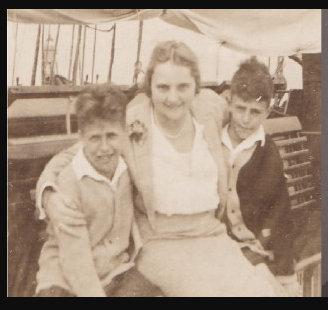
Luke, on right, with his mother and twin brother, Hans, in the early 1930s in Holland

Louis “Luke” Wijnberg, is a resident of a neighborhood in Chapel Hill, North Carolina, that today is known as “Northside.” In close proximity to the university that employed most of its residents, Northside was an all-black neighborhood before desegregation. Over the last fifty years, the neighborhood has seen an influx of new residents and has become more diverse and less affordable. As a volunteer for the Jackson Center for Saving and Making History, I conduct interviews, recording life stories of past and current residents like Luke, who bought his house in 2007.

Luke recently turned 95, so he’s older (but not much older) than some of the other residents I’ve talked with. But unlike the others, he is white.

Before he even agreed to sit down with me, Luke questioned the premise for the interview, suggesting that his reasons for living in the neighborhood had nothing to do with its history. In fact, he didn’t know much about the history of the neighborhood at all and had had little interaction with his neighbors since moving there. As he put it: “I am just one relatively ordinary person who happened to choose 611 Sykes Street as his domicile.”

I persisted, since the director of the Center had passed Luke’s name on to me, mentioning that he knew Luke had a unique and interesting story to tell. For starters, he was a Holocaust survivor.

“Well,” I said. “I want to learn a bit more about your history. You are a Holocaust survivor. Is that right?”

“No. I’m not a survivor. I was never in the camps,” he responded.

The US Holocaust Memorial Museum’s official definition of a survivor includes anyone who was displaced by the policies of the Nazis or their Allies, including refugees like Luke. (www.ushmm.org) Born in Holland, his Jewish parents made arrangements for then sixteen-year-old Luke and his twin brother Hans to emigrate to the United States in 1939. They were adopted by a couple in Brooklyn and heard only after the war ended that their parents, younger brother and many of their close relatives had been rounded up by the Nazis after they occupied Holland, deported to the Westerbork detention camp, and eventually murdered in Auschwitz.

Luke and I continued our introductory conversation for more than an hour. He gave me an overview of some of the major turning points in his life– childhood in Holland, emigration to Brooklyn, matriculation at Brooklyn Polytechnic; enlistment in US Army and return to the European continent as a soldier in WWII; graduate school in engineering physics at Cornell and SUNY; marriage; first jobs in NY state; kids; divorce; second marriage; move to Chapel Hill. By the end of that first meeting, he still was not ready to commit to an interview. He said he’d let me know.

The message I received a few days later was a cc-ed copy of an email addressed to his daughter, Debbie:

I live in the Northside community section of Chapel Hill – traditionally the … enclave for African Americans. UNC has provided some money to establish a kind 0f archive of the residents, old and new, of the Northside neighborhood. One of those residents is me, and Andrea picked on me because I am 94, because I am an immigrant from Europe, because I managed to avoid getting axed in the holocaust (being Jewish), etc. ,because I chose to settle down in late life in the Northside neighborhood. (it was financially doable!) I have not committed myself to provide an interview but am tempted in part in response to Andrea’s obvious interest and dedication.

The next day he confirmed: “I want to go ahead with the interview.”

When I asked him why he conceded, his response was, “If not now, when?” I was, for once, in the right place at the right time.

We began the following Friday– July 25, 2017– and have been meeting more or less weekly ever since. A few times now he’s said in his typical deadpan manner, “We’re going to be doing this until I kick the bucket.”

I am now trying to piece together themes from the stories he’s told me and to begin to reach some understanding of who he is, of the specific circumstances that shaped his life and, in turn, his reactions to and efforts to make sense of those circumstances. My rendering of his life and my understanding of it is incomplete and personal. It is presented here bit by bit, insight by insight. Writing about a life– someone else’s or one’s own– is a process fraught with choices. The writer has someone else’s life in her hands; a series of decisions, some deliberate, some not, transform one person’s stories about their life into the writer’s creation. The stories told are based on what is remembered, fragments, that first the teller, then the writer, piece together into a narrative.

When a life spans more than nine decades as Luke’s does, writing about it feels risky at every turn. Events are recalled that happened long ago. Memory fades though why some are lost and some remain is not clear. And so narratives are incomplete, perhaps random.

Someone who tells the stories is telling how they remember things, and someone who retells the stories is telling not what they heard so much as how they heard them. The fiction that results is what we call “biography” or “autobiography.” And for someone who has been trained to write works that appear on the non-fiction shelves, writing fiction is new terrain.

In the telling of his story, Luke reveals elements that trouble him, raises questions that he cannot answer. It’s as though he is searching for some truth in the telling. — open, reflective, introspective, self-critical. His stories are riveting not only because they contain glimpses into some of the most important developments of the last century, but also because the listener is invited to explores the thoughts and emotions his most vivid memories conjure up. His reflections are lucid and sharp, intellectually rendered but emotionally charged, at times, eccentric, disturbing and humorous. His use of language is very precise and yet appears spontaneous, as though he is thinking out loud; he is a gifted storyteller, who engages the listener not with embellishment and melodrama but straightforward detailed accounts that appear uncensored.

He reflects on his memories as he relates them, engaging the listener’s imagination by his frequent use of phrases like, “I don’t know why I did that,” or “I have no idea why I remember that.” When he then ponders aloud possible explanations, he often brings Freud into the conversation, wondering which subconscious forces might have caused him to focus his attention on certain moments in his life.

What makes talking with Luke such an interactive experience is that he seems to have offered me an open invitation to posit my own spontaneous interpretations, and he takes the time to ponder and react to them. Sometimes he turns the focus on me, asking me to explain my interpretation in greater depth.

The result has been much more than a series of interviews but a relationship between the interviewee–Luke– and the interviewer–me, a friendship that is both intellectual and personal.


Party like Olivia

I have written a lot about the Northside community in downtown Chapel Hill and other historically-black neighborhoods in Chapel Hill. And I also have written about the influx of developers who want to turn family homes into student housing.

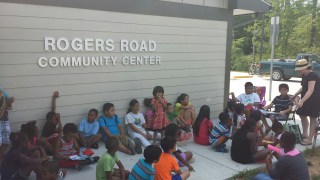
Northside is changing and many “old Northsiders” have embraced the resulting ethnic and socio-economic diversity — including students as well as new immigrants–and have formed alliances with other activists fighting tirelessly to preserve a sense of community. You can see that their hard fought efforts are paying off whenever you step into the Rogers Road or the Hargraves community center at about 3 pm any day of the week.

rena

Every day after school, community activists and volunteers are hard at work and at play with all kinds of kids from the surrounding neighborhoods: African-American, Latino, Burmese (Karen), and white kids are eating delicious snacks prepared for them on-site. They are reading, doing homework, and shooting hoops with college kids and other neighborhood-news-03volunteers; and they are bonding with each other, the way kids do– just by being around each other day in and day out and sensing that they are being treated equally and with respect by the adults in the room.

Many people who lived through segregation will say that they were raised by an entire community– neighbors, teachers, preachers, relatives– and that they were expected to be respectful and play well with others. At the community centers, the same thing is happening today.

The same forces are at work– loving and caring– even if the kids no longer live in the same neighborhood, attend the same church, or go to the same schools, as Northsiders used to. Families aren’t as interdependent, don’t live so close together and don’t depend on each other the way “old” Northsiders did. Something got lost, but thanks to so many activists, there’s still a lot happening every day that is making kids feel a part of something bigger.

Murals at Hargraves Community Center, Northside, Chapel Hill

On a day right before the Thanksgiving holiday,  I asked a spunky third-grader who lives on Craig Street in Northside what she was thankful for. She responded, “I am thankful that I can have a birthday party and invite kids from my neighborhood and that I can play with them whenever I want.” As most parents will tell you, such a thing is rare these days. Parents shuttle kids all over town when they get together for “play dates” and parties.

But Olivia seems to have what Northsiders used to have: enough similar-aged neighborhood kids for a birthday extravaganza. And yet, a party like Olivia’s would never have taken place in Jim Crow Chapel Hill: her party was hosted by her parents, Jason, who is white, and Donna, who is black.

Guests likely reflected the ethnic diversity of today’s Northside.

donna and family

Olivia (in much younger days) with her parents. (Source: donnabell4ch.com)

Community is alive in Northside because its long-time residents largely have accepted change, welcoming new families and students even while resisting and challenging developers and landlords who are indifferent to Northside’s historical importance and community spirit.

greenbridge protest pic

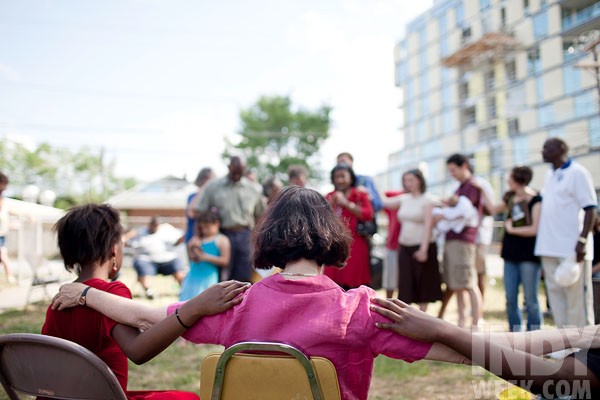
Protest of Greenbridge development   (Source: IndyWeek.com)

And some of the new residents are getting the message and joining seasoned neighborhood activists. They seem to have slowed the tide of disruptive change and succeeded in drawing attention to would be irretrievably lost if market forces aren’t reigned in.

Many current residents are trying to set the terms for the new Northside. Some of those residents have been fighting for years. These days activists’ voices sometimes rise about the din of bulldozers, excavators, and jackhammers, letting the town know that they will not be moved. If, as many here believe, the arc of the university bends toward justice, then history is on their side.

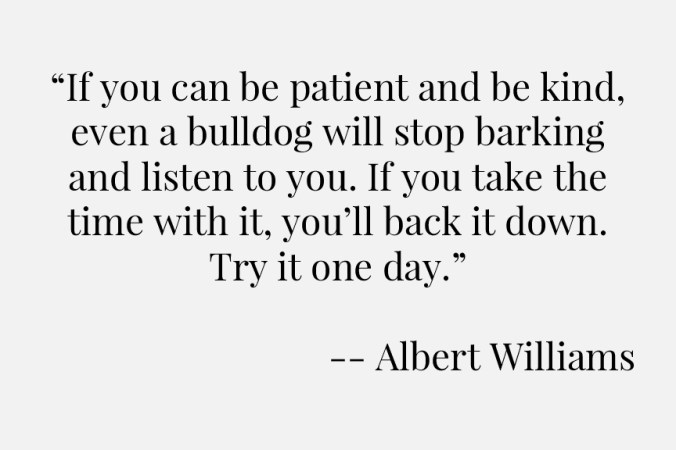
Albert-Williams quote

To join the cause, click here, then contact the Jackson Center. 

Race and class in Carolina

Screen Shot 2017-11-25 at 8.22.01 PM

Source: Wikipedia

His Wikipedia entry gets right to the point: “industrialist, philanthropist, racist.”

How do we make sense of Julian Carr’s legacy today? His financial success and the fame that accompanied it were due to the advantages he had in a racist society that violently subjugated people of color. More accurately stated, he was a racist industrialist and a racist philanthropist; the racism he espoused opened doors for him and closed doors for African-Americans. In the case of his many factories, the doors were closed literally.

Ironically (or maybe not so ironically), one of Carolina’s most liberal towns today bears the name of one of its most outspoken white supremacists.

Due to the influence his money allowed him to buy, he was selected as the keynote speaker at the dedication of the Silent Sam monument which pays tribute to soldiers of the Confederacy and still stands prominently in UNC’s main quad. Leaving no doubt as to the motivation behind the statue’s installation, Carr credited Confederate soldiers with defending the purity of the Anglo-Saxon race in the South, bragging about his own violent enforcement of white superiority. His wealth enabled him to buy the Raleigh News and Observer and thereby to amplify racist viewpoints and silence others.

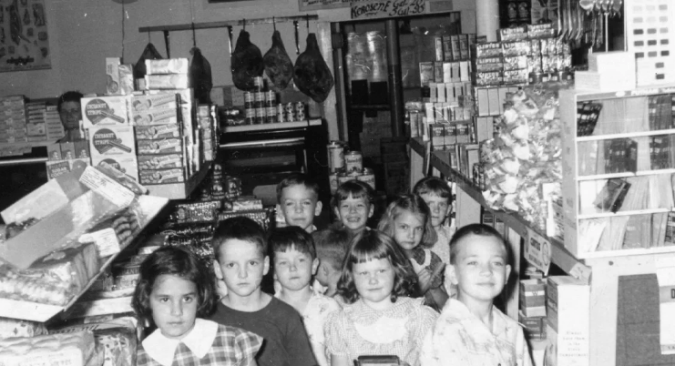
CarrboroPicnic 1950And yet, he also had a reputation as a generous employer. The town, known as Westend, was renamed “Carrboro” after he paid  to have electricity brought to the area in 1909. He opened a textile mill, creating jobs for hundreds of workers and demand for new small businesses. And the events he hosted for his employees and their families earned him a reputation as a magnanimous boss.
 

Screen Shot 2017-11-25 at 9.27.51 PM

Carrboro kids in Cliff’s Meat Market in the 1950s (Source: Chapelboro.com)

Thanks to Mr. Carr, the town appeared to be a Southern small town idyll for the working class. Yet Carr refused to employ African-Americans in the mill. His factory floors were whites-only, and Carrboro became a white-only community.

Paternalistic shows of hospitality were carrots, while a vicious enforcement of anti-union policies were the sticks. Though wages were low, work was stable; such conditions were way beyond the reach of African-Americans who had to choose between sharecropping and working in plantation-like conditions at the University, usually piecing together numerous part-time jobs to make ends meet. University wages were meager; electricity, indoor plumbing and paved roads came to Northside only well into the second  half of the twentieth century.

But not only that. The racist order he and his descendants created by recruiting only white workers for his mill facilitated a local reign of terror against black residents whose neighborhoods were situated along the Carrboro-Chapel Hill border. This order persisted throughout the twentieth century, until the mill officially closed in the 1970s.

1944-chapelhill-negrocommunity

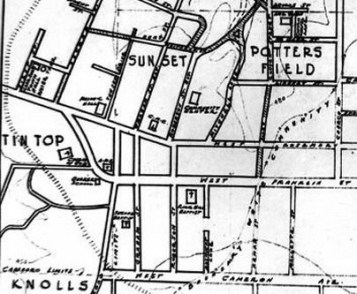
1944 map of African-American neighborhoods in Carrboro and Chapel Hill: Tin Town, Pine Knolls (to the South), as well as Sunset and Pottersfield (together referred to today as “Northside”)

Northsiders have told me that they were acutely aware of the border– Merritt Mill Road– and avoided crossing it. One black neighborhood, a shanty town referred to as “Tin Top” which took its name from the building material used for the roofs, was located on the “wrong” side of the road, dangerously close to Carrboro residences. (Tin Top residences were located in the Kent Court area, on the eastern side of Merritt Mill Road. White neighborhoods, including the Carrboro business district was located along Main Street — see detailed map below)


tin top

Both Carrboro illustrations are taken from: freepages.history.rootsweb.ancestry.com/~orangecountync/places/fcoms/TinTop/TinTop.html

One former Tin Top resident, Don “Hollywood” Riggsbee, remembers occasional skirmishes and sniper-like attacks they launched on white Carrboro residents who threatened them. And a Northsider, David Caldwell, recalled a childhood memory of a brush with a Carrboro Klansman, an encounter which went Caldwell’s way only because the Klansman recognized him as the son of the man who had repaired his car.

As historians often have noted, labor leaders likely may have succeeded in uniting poor working class laborers had industrialists not figured out how to use racism to divide them. Especially in the Reconstructionist South, factory owners like Carr enticed white workers with wages that were higher than those paid to black laborers. The press demonized free blacks and whipped up fear of black crime and violence, not unlike the sorts of press coverage of young black men today. White labor leaders who attempted to cross the color line to organize labor movements (and many did not) ran the risk of becoming victims of white supremacist violence.

Many poor whites in the South bought into the idea that freed slaves posed an economic, political and physical threat to white families; politicians and white power holders of all sorts exploited racist propaganda, not unlike politicians do today.

Gentrification in Carrboro means that it is likely to stay white, just no longer working class. The politics and economy are no longer founded explicitly on racism and exclusion; instead, flags in all colors of the rainbow adorn the lampposts and Carolina’s first openly lesbian mayor inhabits the top office at the town hall. Efforts to create affordable housing are driven by a desire to increase the town’s diversity, a goal the market has placed largely out of reach for low-income and low-wealth families. The goal cannot only be diversity; it has to be social and economic justice.

There is one small but meaningful gesture town leaders can make: honor the call to rename the town. Until the town acknowledges its virulent racist not-too-distant past and stops celebrating the town’s namesake, many Northsiders will always remember the days when they feared for their lives every time they took a short cut to school. How about Cottenboro?

Sources: mastersoftraditionalarts.org; ncmarkers.com

Elizabeth “Libba” Cotten was born in West End, NC (as Carrboro was known then). She was industrious and gave to everyone who would listen. That’s a much more honorable legacy than “industrialist, philanthropist, racist.”

Miss Annie’s Gift

“I’m a giver,” said Annie.

Annie and I were talking about her life growing up in segregated Chapel Hill, moving on, and coming back.

Though this was the first time we’d met, I could discern a clear pattern in Annie’s life: she would earn or be given something, and then she would give virtually all of it away.

She grew up in Chapel Hill in the 1950s and 60s. Her parents moved here from rural Chatham county and bought a small house in central Northside:

603 is the house that we grew up in, 603. Three and a half rooms—bedroom, kitchen, and living room, half of a room my sister and I shared a bed together. And then we had an outdoor toilet when we grew up.  … We didn’t think about—at least I didn’t think about being poor.

I didn’t think about so much the racism that existed in Chapel Hill. I mean, we felt that we already had enough. There was Mr. Ben Baldwin that had a shop right up there. We had a movie theater that we went to. I mean, my mother was in charge of a base- and softball team.  She was like the street leader and any time somebody died or got sick she would go around and collect the money for them. So this was like a community. … And we had to walk to Northside [School]. We had to go across the little stream and, you know, had good days there. 

Like most everyone in the neighborhood, both parents worked for the university, her father as a janitor and her mother in the laundry. She recounted with obvious pride how eventually her father landed a position as President Bill Friday’s personal assistant.

“We just called him Friday’s boy,” says Annie and laughs.

Her father was, above all, a clever businessman, a “spendthrift,” as Annie calls him, who managed not only the family’s finances and property, but those of family members and neighbors. As Annie put it: “He just had the business acumen. It was just like a gift, I guess. God gave him a gift.”


Screen Shot 2017-11-16 at 3.17.37 PM

Annie (top right) and some of her classmates who also lived in the Northside and Pine Knoll neighborhoods and whose family names are familiar to generations of Northsiders.


Annie left Northside after graduation and attended Winston-Salem State, an all-black college in the Jim Crow South, where she felt very far away from home. As a woman, she was presented with two options there: teaching or nursing. She ruled out teaching, which left nursing, a choice that eventually led to a very successful career in education, research, and management. But none of this was obvious back then. As she tells it:

Annie: I finished college in 1961. So, I came back home, went to work at North Carolina Memorial Hospital. It wasn’t UNC hospital then. North Carolina Memorial Hospital.

        Me: Was it integrated?

Annie: No, I worked as a staff nurse on the six A, which was the unit for white folks. Black folks were on 4-B, (…) medicine. The hospital was segregated. We had to go in the basement to the cafeteria. 

She returned only briefly to Chapel Hill. She had met her future husband at Winston-Salem State and she moved with him to Baltimore where she worked a a nurse and raised her family.

She smiles and laughs when she recalls those years: “Oh, I loved Baltimore. I just loved Baltimore.”

She earned a master’s degree in nursing at the University of Maryland, raised her two kids and ten years later returned to the Triangle to teach at NCCU. Chapel Hill was now officially desegregated, but she chose to live in Durham instead since that was where she and her husband could afford a house. Chapel Hill had become too expensive and the old neighborhood as she remembered it was no more. “It was totally different. I didn’t know anybody.”

Annie and her family moved to Durham instead. Though she still had a very direct connection to Northside, since her parents were living at 221 N. Graham Street, not far from 601 Craig where they raised their daughters. Then Annie’s mother developed Alzheimer’s disease:

Every morning I came and every evening I came. And on Sundays, I would come and stay so he could go to church. So that– and he was in charge of the men’s chorus at the church down there. So for him to continue, I gave up going to church.

Annie missed going to church. So she enrolled in a bible college to keep a spiritual connection and “learn more about the word of God.” Her faith sustained her and clearly informs the decisions she makes in her life.

And it seems that everywhere she worked, she was able to touch people’s lives — as an inspiring teacher, a role model in her field, a pathbreaker in psychiatric research and a voice of dignity in workplaces often hostile towards African-Americans. She was always giving.

Once her father passed, Annie had to make a decision about the properties in Northside. Her childhood home sits right next to a property that originally was owned by her mother’s sister. Her father had eventually purchased this property, too. Annie and her sister, Barbara, decided to sell both– 601 and 603 Craig Street, under market value, to the EmPOWERment fund, which will now create affordable rental housing for people who have spent years on the streets.

Annie’s former childhood home is now a construction site. As I passed the house just a few days ago, two men stood in front of it, troubleshooting and venting. They had been hired to take down the big old tree right next to the house; their crane operator had come and gone after discovering that other workmen had blocked his access. It was going to cost them, and they were frustrated. I realized from the name on one of the men’s trucks that he was also someone with ties to the neighborhood. He told me he had been a friend of Annie’s sister and graduated from all-black Lincoln High in 1959, two years after Annie.

The conversation went something like this:

Me: Isn’t it great what Annie did by selling her property to EmPOWERment?

JF: You know, some people have said to me, She can get more for it. She could have rented it out to students. She don’t have to rent it so cheap. She could get a lot more. But, you know, it’s good.

Me: Yeah, two people who were homeless are going to move in.

JF: See, that’s good. It’s a good thing. But my buddy just said, why doesn’t she charge more? I mean, she should charge more.

That’s probably what a lot of people would say. After all, why not?

Annie talks a lot about her father’s larger than life personality. She calls him “an awesome, awesome man.” He spent so much of his life building a future for his family and worked tirelessly to leave something of value to Annie. And so, she says, he would just kill her if she knew she was giving it away. That makes so much sense. So much is owed to those who endured Jim Crow in Chapel Hill. Annie’s father did whatever he could to defy the tremendous injustices that kept blacks from owning any sort of property and enjoying the freedom and self-determination that comes with it. He wanted to pass this on to future generations.

It’s a great thing Annie’s doing. How many others with much more wealth would do the same? The wealthy accumulate wealth by understanding and not second-guessing the market. According to any investor, supply and demand are the arbiters of price, and underselling is like messing with the laws of nature.  And so most people would say that someone who sells or rents below market price is either a saint or a sucker.

And yet, that’s what local activists in Northside and Pine Knolls and Rogers Road feel they have to do before it’s too late. Community leaders are open to change. But they know that market forces will undermine those who seek to preserve and renew the spirit of cooperation and neighborliness they’ve known.

Annie is part of this larger struggle. Without her and other legacy sellers, the neighborhood would lose out. Something new would replace it that would be based on principles that have proven to be detrimental to diversity and lasting community connections. Neighbors would become residents, relationships would become more superficial, transient and impersonal. We know this because that’s what has happened in so many suburban and gentrified urban neighborhoods.

In this way, Annie is a revolutionary as well as a Mensch. Her story makes people stop and think about the way business is usually done. Far from resisting change, Annie challenges us to change the ways in which business is done for the sake of something more lasting, more worthwhile. It’s radical. But in a capitalist economy, real communities always have been. Annie’s contribution will insure that capitalist forces do not destroy an endangered, fragile community.

Annie’s father must be smiling down on Annie, proud of what she is passing on, proud of her generosity and kindness, proud that she is doing well and doing good. She is a legacy seller but she isn’t throwing away her father’s legacy. She is honoring the neighborhood he loved by sharing his legacy with others.


New Urbanism, Old Story

 As long as money wins, black people will lose.

                                                             Margaret Kimberley


Chapel Hill is changing face fast. In the last five years, the downtown skyline has transformed dramatically. Medium-rise luxury apartment buildings and hotels, shopping areas and high-end restaurants have replaced smaller, scruffier buildings and storefronts.

most livableAnd the town has garnered accolades like “most livable small cities in America.” Even the New York Times can tell you how best to spend “36 hours in Chapel Hill,” and, in October the travel section of the London daily, The Guardian, featured Chapel Hill as one of the top ten best small towns and cities in the US. The question of course is, “Best for whom?”

The savvy, sophisticated European traveller has money to spend and wants fancy digs, good food, microbrews, pumpkin spice non-fat lattes, and night life options– more like an upper class “theme park” (Kimberley) than a place where regular people are just going about their daily lives.

These trendy new businesses and dwellings are part of a larger trend some call the New Urbanism. Developers are marketing to young professionals who are no longer looking so much for a house in the suburbs but rather a loft or boutique apartment in upgraded downtown areas with specialty shops and a hip night life. Andrew Busch, writing about the last decade or so in Austin, Texas, comments on the “new interest in urban space, lifestyles, and consumption preferences,” and the developers and city managers eager to make profits from rents and property taxes.

While upscale development has been occurring on Franklin Street, which was always the student (white) part of town, developers recently have set their sights on Rosemary Street, a parallel street just one block north of Franklin. Under segregation, Rosemary Street was where Blacks owned businesses; it was the southern border of the Northside neighborhood, but customers also came from nearby Pine Knolls and Rogers Road. This area is now considered prime real estate for developers due to its direct proximity to the main business district.


ch downtown 3

Franklin and Rosemary Streets, downtown Chapel Hill

The urbanization of Franklin Street includes plans for “livable” condos with green patches; a new performing arts center; and new residential/commercial complex.

I’ve been telling the stories of the residents and former residents of Chapel Hill’s low-wealth African-American communities who have witnessed and fought this trend. During segregation, minorities were told where they could establish neighborhoods. Through racial redlining, town leaders placed African-Americans in places that benefitted whites and the university, which benefitted from the close proximity of its labor force, at very little cost to taxpayers. Social services, including paved roads, sewer systems, and ambulance service, were virtually non-existent in these areas.

And now that capital interests have shifted, many of the old residents and their kids and grandkids are driven out by market forces that are distinctly racist. Too much black is bad for business. The existence of black people and a low-income, mom and pop infrastructure is now considered blight that is “bringing down the neighborhood” where whites want to live and play.

Busch nails it when he writes:

The most deleterious outcome of gentrification is its effect on existing social cohesion, which is much more important for vulnerable and historically segregated neighborhoods of color where residents have fewer relocation options and are more dependent on the neighborhood for social structure than are residents of middle class neighborhoods.   (Busch, Crossing Over)

He is spot-on when he observes that African-Americans who were cordoned off from the white community by written and unwritten codes had to rely on each other and organize themselves to provide each other basic services. Thus, they “tend to understand community in terms of place, especially in historically segregated locations.” When residents speak of growing up in the Northside neighborhood, they almost always say it felt like the only place they could really be safe and free. Jobs and schools were usually located outside. Otherwise, the neighborhood was a world unto itself.

Under segregation, an entire infrastructure was built in black-only neighborhoods: schools, businesses, recreation facilities. Often, these areas had no city services and had to provide for these services by organizing themselves. This meant that families had to develop tight social and economic networks and communities developed around a sense of place.

Some properties on Rosemary Street that have avoided gentrification include the old parsonage (now the Jackson Center for Saving and Making History), St. Joseph’s CME and Mama Dip’s restaurant. Mama Dip, her sister and children still live in the neighborhood.

As urban living became more trendy, developers quickly figured out that neighborhoods close to downtown would become desirable. In neighborhoods like Northside, they saw a “rent gap.” This housing was cheap and with some improvements and upgrades, could be rented at much higher rates, no longer affordable to low-income residents.

Rosemary in flux: a house on Rosemary listed by a realty company called, “Property Shark”; the new Mariot AC hotel that markets itself as a “new take on an old tradition” just steps away from the “bustle” of Franklin Street.

I’ve also begun to interview some of the white and better-off residents—not so much the students who are moving into developer-renovated apartments and duplexes, but single-family (and single-owner) homes that used to belong to African-Americans. One of these homeowners, whom I’ll call Leo, confirms Busch’s point. He told me, “I bought the house because it was what I could afford. I didn’t know much about the neighborhood. And I don’t really have any contacts in the neighborhood. My community is exclusively outside of Northside.”

Since I’ve begun talking to him about his life, we’ve come back to this point a few times. He now says that he plans to make more of an effort to develop better relationships with neighbors, though he still finds some of the interactions awkward. He says some of the differences in speech and habits are difficult to understand. It should be said that he is an octogenarian who retired here after living most of his life in the Northeast and that there are definite cultural differences.

Many Northsiders and Pine Knollers are seeing their friends and family members being displaced by others who can afford the rising prices. Chapel Hill has seen a heavy outmigration of African Americans. Members of these communities are much more vulnerable to rent hikes that can be sudden and steep. As businesses that served minority communities are replaced by businesses like boutiques, cafes and restaurants, residents no longer have convenient shopping options for basics. When I first moved to town ten years ago, there was still a Rose’s on Franklin that catered to a low-income clientele. But this has since been replaced by a luxury movie theater. The closest discount store is the Walmart in Durham. Families can no longer afford to live in what are now apartments designed for and marketed to singles or couples.

Grassroots organizations like CHALT (Chapel Hill Alliance for a Livable Town) address environmental issues but rarely mention low-income residents or affordable housing; the incumbent mayor was defeated in 2013 and replaced by a candidate supported by many who want to slow down development, including the building of new housing. On the surface, this sounds like a good thing. But it does not address the dwindling lack of affordable homes and shops for low-income people. Roses might not be pretty or locally-owned, but it was one of the places low income residents could afford. When demand for housing rises and residents want to keep things the way they are, low-income people are driven out.

It’s hard not to feel local pride when your town is consistently identified as one of the  most “livable” communities. And yet, I know this ignores the fact that it has become unlivable for the younger generation of Northsiders and other African-American and immigrant communities who called Chapel Hill home. In fact, the sort of development that makes it “livable” for hip young professionals requires that neighborhoods largely be purged of the businesses and housing that low-income residents need.

A few years ago, the mayor of Morgantown, West Virginia, returned to Chapel Hill where he’d been a student and, in an editorial, chastised then-mayor Mark Kleinschmidt for tolerating the “unkempt appearance” of the Franklin Street he used to frequent. He urged the town council to “apply their efforts to revitalize the cultural and commercial area on Franklin Street and beyond.” (“Mayors duke it out over downtowns, Morgantown News Herald, July 15, 2010) Neither he nor Kleinschmidt defended his efforts to improve downtown, mentioned the Northside neighbors or the idea of bringing in business and housing to support them. Implicit in his remarks is that the neighborhood and its infrastructure need to go, or at least be upgraded. Main Streets full of boutiques and expensive restaurants are more like theme parks for the well-to-do than livable spaces for everyone.

In a capitalist society, does it make sense to expect anything else? There is a growing movement of diverse people—activists, church leaders, community organizations, low-income people, concerned students—who are pushing back.

Making history in 1961 and in 2017.

A big part of claiming the places that are traditionally African-American is to constantly remind the town of its racist past. That’s what the Jackson Center is trying to do. And the history reflects the injustices of segregation, Jim Crow and racial violence as well as cultural resilience. So often when African-American neighborhoods are gentrified, a certain version of the historical heritage is celebrated. Although he was talking about Austin, Texas, Andrew Busch warns against “the problems of memorializing social domination.” He goes on: “As older residents and businesses leave, the segregationist past seems less relevant while the happy representations of … interracial community remain.”

It’s up to all of those who want racial and socio-economic diversity to talk about the history of segregation. If we’re not talking about race, we’re letting money run African-Americans, Latinos, Burmese, and other immigrant groups out of town. The past speaks and can guide all of us who want the moral universe to bend toward justice now.


Some great reads on the subject: 

Andrew Busch, “Crossing Over: Sustainability, New Urbanism, and Gentrification in Austin, Texas” Southern Spaces, August 19, 2015.(https://southernspaces.org/2015/crossing-over-sustainability-new-urbanism-and-gentrification-austin-texas)

Margaret Kimberley, “Gentrification and the Death of Black Communities,” Common Dreams, May 29, 2015. (https://www.commondreams.org/views/2015/05/29/gentrification-and-death-black-communities)

Promoting the General Welfare

If images do not appear, click here: If images do not appear, click here: Promoting the General Welfare

andreacwuerth's avatarFacultyMeeting


We the people, in order to form a more perfect union, establish justice, insure domestic tranquility, provide for the common defense, promote the general welfare and secure the blessings of liberty to ourselves and our posterity, do ordain and establish this Constitution of the United States of America.   (From the Preamble)

The audience, sitting on folding chairs, packed tightly into the basement fellowship hall of St. Joseph’s CME church, listened intently to Miss Pat Jackson, a charismatic middle-aged woman, dressed in a fuchsia suit with a striking, perfectly tied, red silk scarf, as she told them about the Northside neighborhood and church she grew up in. As far as I could tell, many of the assembled– members of a UCC church just down the street from St. Joseph’s– were hearing about the history of the historically African-American neighborhood and church for the first time.

Also among the audience was…

View original post 759 more words

Tiny Heroes


Screen Shot 2017-10-16 at 10.46.31 PM

“They will continue to build two story residences right across the street from you for students to live because, as the developer told me, it’s more economical to rent to students than to families.”   Kathy Atwater

It was a beautiful sunny fall afternoon in Northside and the tiny party was in full swing.  On the corner lot at Sykes and Craig, builders and sponsors were showcasing the brand new floor plans of what once was a three-bedroom family home, and will soon be two homes under one roof. These two tiny houses will give someone who otherwise would never be able to move to downtown Chapel Hill a tiny piece of some prime real estate. Rent is only a few hundred dollars a month per unit.

On this October day, contractors chatted with curious residents about tiny floor plans; fair housing activists served up barbecue on tiny buns; and kids ran around dipping tiny wands into tiny bubble dispensers, blowing tiny bubbles at each other: tiny props celebrating a very big deal.

Some would say the big deal is that the university and other community organizations with money to lend recognized the need to provide affordable housing to low income individuals and families who want to live in Chapel Hill.

Others might say it’s a big deal that local activists persisted over years in getting the university to pay attention to this need. Now they are able to offer resources, financial and other, to help low-income homeowners make property tax payments and repairs.

Without minimizing the role that so many played in the construction of two 350-square-foot houses just blocks from Franklin Street, none of it would have happened had not someone decided to give back rather than to do what most would have done—make a bit of money on the sale of a property.

The biggest deal of all are the heroes whose names very few know: the Northside home owners who sacrificed the fruits of their investment for the community of the future: Tasha and Theresa Edwards, who sold their quadraplex to the landbank way below market value so that they will remain permanently affordable; and Annie Hargett, who held on to her houses so they wouldn’t be lost to developers; and Paul Caldwell, who has refused developers’ offers since, as he puts it: “My home is a rock and I shall not be moved.” And there are more and will be more, following the way made straight by Tasha, Theresa, Annie, Paul and other heroes.

This handful of people wanted to make sure the house in which they grew up would not be sold to the highest bidder, but would continue to house people who otherwise could not afford to live in the neighborhood they love. Their generosity and kindness brings so much joy to so many families. Their act of love is spreading the love all over Northside and beyond.

tiny-house-living-1-600x450

This moment and others like it in the last year or so are turning the tide of gentrification. As state senator Valerie Foushee put it: we’ve witnessed “a transformation from dreams to hope, from hope to promise and from promise to reality.” And the spirit of generosity will live on in Northside for generations to come.

(Photo courtesy of the Daily Tarheel)